
In a country as vast as Australia, geography should not dictate the quality of your medicolegal evidence.
Traditionally, securing an Independent Medical Examination (IME) for a claimant in a rural or regional area was a logistical nightmare. It involved expensive travel, overnight accommodation, and significant disruption to an injured worker’s life.
The rise of Telehealth has revolutionised this process. However, for legal professionals and insurers, the shift to virtual assessments raises critical questions: Is the evidence admissible? Is the platform secure? Can a proper physical assessment be conducted remotely?
At MEDirect, we provide a robust, ISO 27001 secure platform designed to facilitate high-quality Telehealth Medicolegal Assessments. We connect you with specialists who are not only clinical experts but are also trained in the nuances of virtual forensic reporting.
What is a Telehealth Medicolegal Assessment?
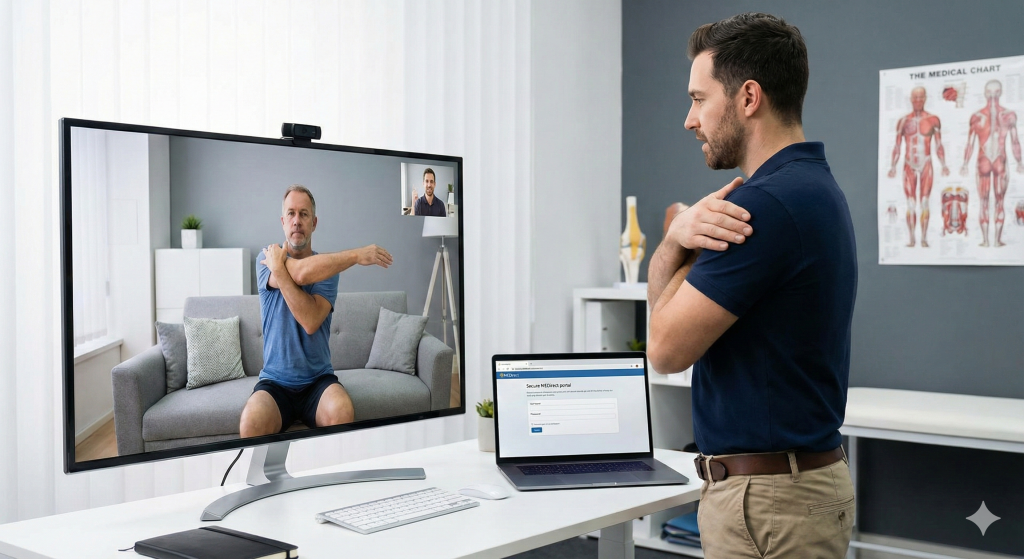
A Telehealth IME involves the use of secure video conferencing technology to conduct an Independent Medical Examination. It allows a claimant to be assessed by a leading specialist—often located in a major city—from the comfort of their own home or a local GP’s office.
While the mode of delivery is digital, the forensic standard remains the same. The expert must still:
- Take a comprehensive clinical history.
- Assess the consistency of the presentation.
- Provide a definitive opinion on causation, impairment, and capacity.
When is Telehealth Appropriate for an IME?
Not every case is suitable for a virtual assessment. However, Telehealth is increasingly accepted by Australian courts and tribunals for specific injury types:
1. Psychiatric Assessments (The Gold Standard)
Psychiatric IMEs are ideally suited to Telehealth. The assessment relies primarily on clinical interview, mental state examination, and history taking—none of which require physical touch.
- The MEDirect Advantage: Access senior Forensic Psychiatrists for complex PTSD or institutional abuse claims without subjecting a vulnerable claimant to the stress of travel.
2. Allied Health & Functional Reviews
Assessments by Occupational Physicians or Rehabilitation Specialists often focus on “capacity for work” and documentary review. These can be effectively managed via video link, especially when determining a return-to-work plan.
3. Review of Medical Files (Desktop Reports)
In some complex liability cases, a physical examination adds little value compared to a forensic review of the clinical file. A Telehealth conference can be used simply to clarify specific history points with the claimant before the expert finalises their opinion.
The MEDirect Digital Difference: Security & Compliance
Many brokers use generic video tools (like Zoom or Teams) that may lack the specific security architecture required for sensitive medical data.
MEDirect’s platform offers:
- ISO 27001 Alignment: The highest standard of information security, ensuring your client’s data is encrypted and protected.
- Integrated Workflow: You don’t need to email separate links. The booking, the briefing documents, and the video link are all housed within the one secure dashboard.
- Identity Verification: Our experts are trained to verify the identity of the examinee at the start of the call, a critical step for maintaining the integrity of the evidence.
Benefits of Booking a Telehealth IME via MEDirect
1. Speed and Efficiency
Telehealth removes the “travel buffer.” Experts often have more flexibility in their calendars for virtual appointments, meaning you can secure a report weeks earlier than a face-to-face slot.
2. Reduced Costs
Eliminate travel expenses (flights, taxis, hotels) for regional claimants. This is a significant saving for insurers and allows capped funding to be spent on treatment rather than logistics.
3. Claimant Comfort
For claimants with mobility issues or severe psychological distress (such as agoraphobia), attending a clinic in a busy CBD can be re-traumatising. A Telehealth assessment in their own environment often yields a more accurate, less guarded history.
Can Physical Injuries be Assessed via Telehealth?
This is a common concern. While Telehealth has limitations for complex orthopaedic manipulation, experienced experts can still observe:
- Range of motion (active movement).
- Gait and mobility.
- Scarring and deformity.
For cases requiring detailed physical testing, MEDirect can facilitate a Hybrid Model, where a local physiotherapist or GP attends the Telehealth session to perform specific maneuvers under the specialist’s video supervision.
Summary
The future of medicolegal reporting is hybrid. By embracing Telehealth Medicolegal Assessments, you expand your pool of available experts and deliver a faster, more humane experience for your clients.
Don’t let distance compromise your case.
[Search for Telehealth-Ready Experts Now]
Frequently Asked Questions
Are Telehealth IME reports accepted by the court? Yes. Courts and tribunals across Australia generally accept Telehealth evidence, provided the expert notes the mode of assessment and any limitations it imposed on their opinion.
What technology does the claimant need? They need a device with a camera and microphone (smartphone, tablet, or laptop) and a stable internet connection. MEDirect’s platform is browser-based, so no complex software installation is required.
Is the video session recorded? Recording policies vary by state legislation and the individual expert’s consent. If recording is required, it must be agreed upon by all parties prior to the commencement of the assessment.